
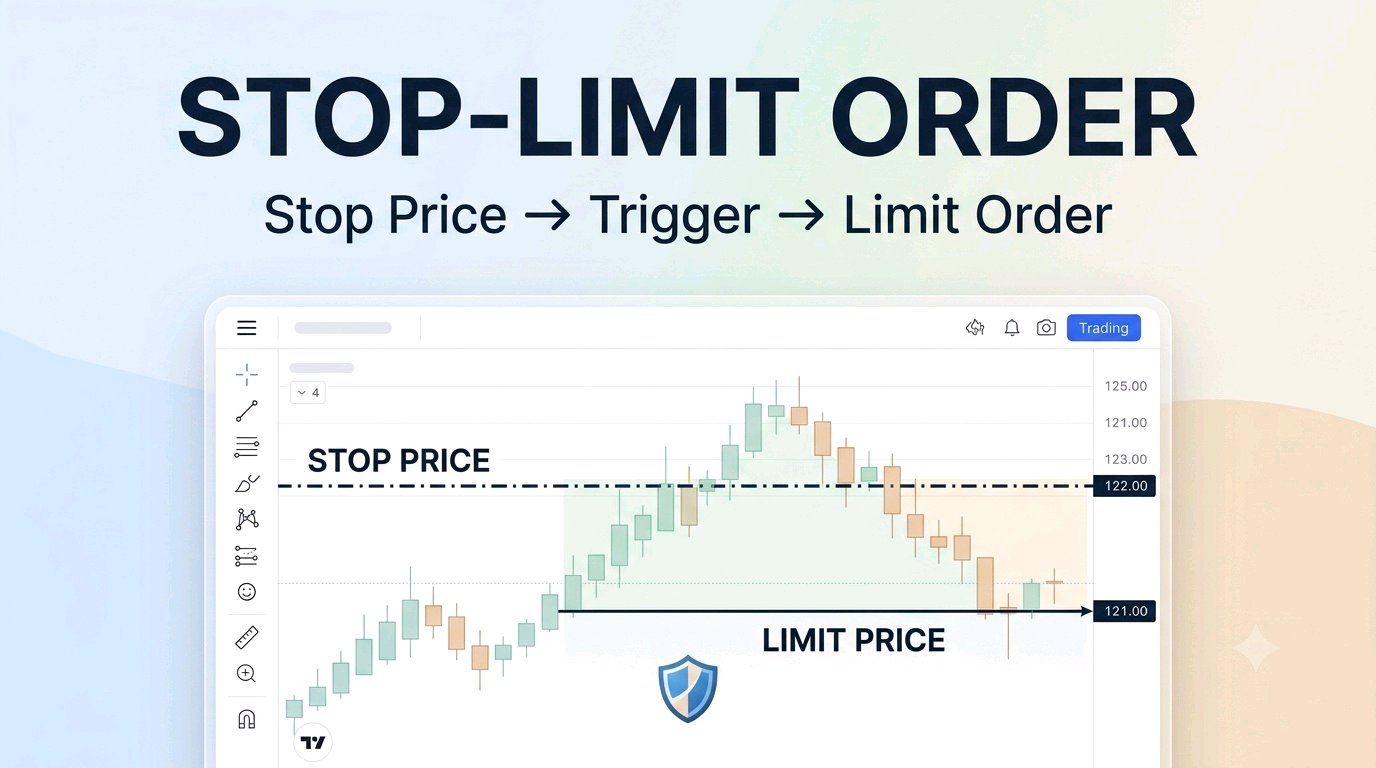
Learn what a stop-limit order is, how stop and limit prices work together, when traders use this order type, and the important risks you should understand before placing one.
Stop-Limit Order Explained: How It Works, Examples, Benefits & Risks
Visual idea: The stop price activates the order; the limit price controls the maximum or minimum acceptable execution price.
What Is a Stop-Limit Order?
A stop-limit order is a trading order that combines features of a stop order and a limit order. It is designed to become a limit order once a specified stop price is reached.
In simple terms, a trader chooses two important prices: the stop price and the limit price. The stop price acts as the trigger. Once the market reaches that trigger, the order becomes a limit order. The trade will then execute only at the limit price or a more favorable price, depending on the direction of the order and available market liquidity.
How Does a Stop-Limit Order Work?
Understanding the sequence is important because a stop-limit order does not guarantee that a trade will be completed. The order generally moves through two stages.
Step 1: Choose the Stop Price
The stop price is the level that activates the order. Before this level is reached, the stop-limit order normally remains inactive according to the broker's order rules.
Step 2: The Stop Price Is Triggered
When the market reaches the specified trigger level, the stop-limit order becomes an active limit order. The exact trigger mechanics can vary between brokers and markets, so traders should understand the rules of their trading platform.
Step 3: The Limit Price Controls Execution
After activation, the limit price determines the worst price at which the trader is willing to accept an execution. The order can execute at the limit price or at a more favorable price, but it may remain unfilled if suitable market prices are unavailable.
Stop-Limit Order Example
Suppose a fictional stock is trading around $100. A trader wants to sell if the price starts falling, but does not want the order to execute below a particular level.
| Order Setting | Example | Purpose |
|---|---|---|
| Current Market Price | $100 | Current reference price |
| Stop Price | $95 | Activates the order |
| Limit Price | $94 | Sets the lowest acceptable sell price |
If the market reaches the $95 stop price, the order becomes a limit order at $94. If buyers are available at $94 or a better price, the order may execute. If the market falls rapidly below the limit price, however, the order may not execute at all.
Buy Stop-Limit vs. Sell Stop-Limit
Stop-limit orders can be used for both buying and selling. The relationship between the stop and limit prices depends on the type of order.
| Type | Typical Purpose | General Price Relationship |
|---|---|---|
| Buy Stop-Limit | Enter a position after price moves upward | Limit price is generally at or above the stop price |
| Sell Stop-Limit | Exit a position after price moves downward | Limit price is generally at or below the stop price |
Exact order-entry requirements can differ by broker or exchange. Always check the platform's order rules before submitting an order.
Stop Price vs. Limit Price
One of the most common sources of confusion is the difference between the stop price and the limit price.
Stop Price
The stop price is the trigger. When the relevant market condition reaches this level, the stop-limit order is activated.
Limit Price
The limit price is the execution boundary. Once activated, the order can execute only at the limit price or a better available price.
Remember the easiest way to distinguish them: Stop = trigger. Limit = execution boundary.
Stop Order vs. Stop-Limit Order
A stop order and a stop-limit order may look similar, but their execution behavior is different.
| Feature | Stop Order | Stop-Limit Order |
|---|---|---|
| Trigger | Uses a stop price | Uses a stop price |
| After Trigger | Becomes a market order under applicable rules | Becomes a limit order |
| Execution Price | Not guaranteed | Limited to specified price or better |
| Execution Risk | Price may differ significantly from trigger | Order may remain unfilled |
Stop-Limit Order vs. Limit Order
A regular limit order is active immediately after submission, subject to the platform's order rules. A stop-limit order has an additional trigger condition.
For example, a limit order can say, “Buy only at or below my chosen price.” A stop-limit order can instead say, “Wait until the market reaches my trigger, then place my limit order.”
Benefits of Stop-Limit Orders
1. Greater Price Control
One of the biggest advantages is that the trader can define an execution boundary. This can provide more control than a traditional stop order.
2. Helps Manage Trading Risk
Stop-limit orders can be incorporated into a broader risk-management strategy by defining when an order becomes active and the price boundary for execution.
3. Useful for Planned Entries and Exits
Traders can use stop-limit orders to plan potential entries or exits without constantly watching the market.
4. Can Reduce Unexpected Execution Prices
Because a limit price is specified, the order is not designed to execute at unlimited prices after the trigger.
Risks and Disadvantages of Stop-Limit Orders
1. The Order May Not Execute
This is the most important risk. If the market moves quickly beyond the limit price, there may be no matching orders at an acceptable price.
2. Fast-Moving Markets Can Create Problems
During periods of high volatility, the market can move through both the stop and limit levels quickly. This can leave the trader with an unfilled order.
3. Gaps Can Affect Execution
If a security opens or trades at a substantially different price from the previous level, the stop-limit order may activate without finding an acceptable execution price.
4. No Guaranteed Exit
A stop-limit order should not automatically be treated as a guaranteed protection mechanism. The limit condition can prevent execution when the market moves too far too quickly.
When Might Traders Use a Stop-Limit Order?
The appropriate order type depends on the trader's objective, market conditions, liquidity, and risk tolerance. A stop-limit order may be considered when price control is more important than guaranteed execution.
- When planning a conditional entry.
- When planning a conditional exit.
- When a trader wants a defined execution boundary.
- When avoiding potentially unfavorable market-order execution is important.
- When the security has sufficient liquidity for the chosen strategy.
Common Stop-Limit Order Mistakes
Mistake 1: Confusing the Stop and Limit Price
Always understand which price activates the order and which price controls execution.
Mistake 2: Setting the Prices Too Close Together
In a volatile market, a very narrow gap between the stop and limit prices may increase the possibility of non-execution.
Mistake 3: Assuming Execution Is Guaranteed
A stop-limit order can fail to fill if the market moves beyond the specified execution boundary.
Mistake 4: Ignoring Liquidity
Thinly traded securities may have wider spreads or insufficient orders, which can affect the likelihood of execution.
Mistake 5: Not Checking Broker Rules
Different brokers, exchanges, and trading platforms may apply different order handling rules. Review the platform's documentation before using advanced orders.
How to Think About a Stop-Limit Order
Stop price reached → Limit order activates
Favorable price available → Order may execute
Market moves beyond limit → Order may remain unfilled
This simple sequence captures the most important concept behind a stop-limit order. It is not simply a “stop-loss with a guarantee.” Instead, it combines a trigger with a price restriction.
Stop-Limit Order: Quick Summary
| Question | Answer |
|---|---|
| What is the stop price? | The price that activates the order. |
| What is the limit price? | The price boundary for execution. |
| Does activation guarantee execution? | No. |
| Main advantage? | Greater control over execution price. |
| Main risk? | The order may not execute. |
More Business & Trading Tips
- Loading useful articles...
Frequently Asked Questions About Stop-Limit Orders
What is a stop-limit order in simple words?
A stop-limit order uses a stop price as a trigger and then activates a limit order. The trade can execute only at the limit price or a better available price.
What is the difference between stop price and limit price?
The stop price activates the order. The limit price determines the maximum or minimum acceptable execution price, depending on whether the order is a buy or sell.
Can a stop-limit order fail to execute?
Yes. If the market moves beyond the limit price or there is insufficient liquidity, the order may remain unfilled.
Is a stop-limit order the same as a stop-loss order?
No. A stop-limit order becomes a limit order after its trigger is reached. A conventional stop order generally becomes a market order after activation, subject to the applicable market and broker rules.
Why would someone choose a stop-limit order?
A trader may choose it when controlling the execution price is important and they are willing to accept the possibility that the order may not be filled.
Are stop-limit orders suitable for every market?
Not necessarily. Liquidity, volatility, spreads, trading hours, broker rules, and the trader's objective should all be considered before selecting an order type.
Final Conclusion
A stop-limit order combines a trigger mechanism with a limit on execution price. The stop price activates the order, while the limit price determines the price boundary at which the order can be executed.
Its biggest advantage is price control, but its biggest drawback is equally important: execution is not guaranteed. In a rapidly moving or illiquid market, the price can move beyond the limit before a matching order is available.
Understanding the difference between stop orders, limit orders, and stop-limit orders can help traders choose an order type that better matches their specific objectives and risk-management approach.