
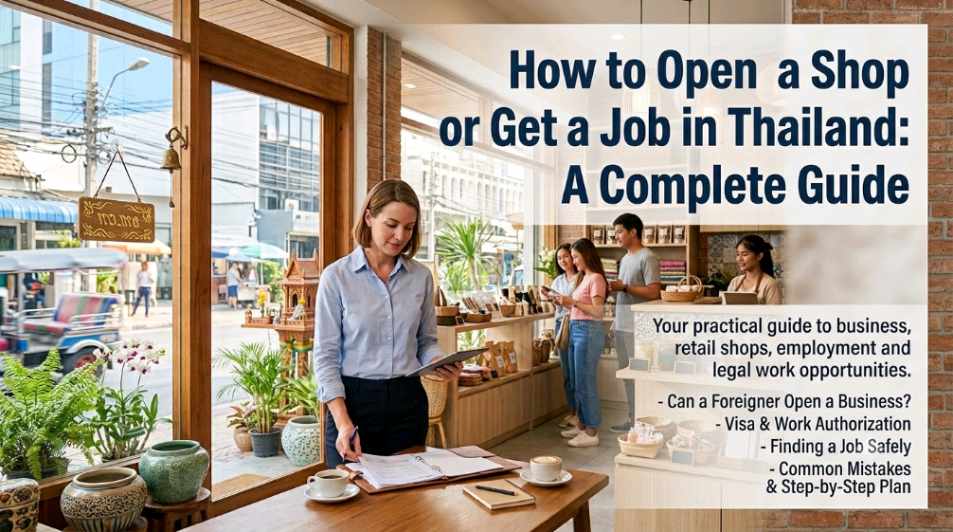
Can a foreigner open a shop or get a job in Thailand? Yes, opportunities exist, but opening a business and working in Thailand are not simply tourist activities. You need to understand the correct visa, work authorization, business registration, licensing, tax and foreign-business rules before spending money or starting operations. This guide explains the process in simple language so entrepreneurs, professionals and long-term visitors can understand the main steps involved.
How to Open a Shop or Get a Job in Thailand: A Complete Guide
Thailand is attractive to entrepreneurs, professionals and people looking for international business opportunities. The country has a large consumer market, busy tourist destinations, growing digital businesses and many different employment sectors. However, opening a retail shop in Thailand as a foreigner is different from simply renting a shop and starting to sell products.
The first thing to understand is that business ownership, working in a business and immigration status are separate legal matters. A person may be allowed to invest in a business but may still need the appropriate authorization to perform work. Likewise, having a visa does not automatically mean that every type of work is permitted.
If your goal is to open a shop, start a small business, work for a Thai company, or build a long-term career in Thailand, careful planning can help you avoid expensive mistakes.
Main Topics
1. Can a Foreigner Open a Business in Thailand?
A foreigner may be able to establish or invest in a business in Thailand, but the rules depend heavily on the type of business, ownership structure and activities of the company.
Thailand's Foreign Business Act divides certain restricted activities into different lists. Some activities are prohibited or restricted for foreigners, while certain activities may be possible with the appropriate permission or license.
Important: Do not assume that registering a company automatically gives you permission to operate every type of business or personally perform every job in that business.
Before renting a property or purchasing inventory, check whether your planned business activity is permitted for your proposed ownership structure. If the activity requires additional permission, obtain professional advice and complete the necessary process before beginning operations.
2. What Should You Plan Before Opening a Retail Shop?
Opening a successful shop involves much more than finding a good location. A proper business plan should cover the target customers, products, suppliers, rent, staff, taxes, marketing and expected cash flow.
Choose the Right Business Idea
Start by identifying a product or service that has genuine demand. A small shop can focus on a specific niche instead of trying to sell everything.
- Convenience and everyday products
- Tourist-oriented products
- Food-related businesses
- Specialty retail
- Online and offline businesses
- Professional and digital services
The best idea depends on the location, customer profile, competition and legal requirements.
Research the Location
Location can strongly influence a retail business. A shop near a tourist area may have different customers from one located in a residential neighborhood or business district.
Before signing a long lease, study foot traffic, nearby competitors, customer spending habits, parking, transportation access, local demand and seasonal changes.
Calculate the Complete Startup Budget
Your budget should not only include rent. Consider deposits, renovation, furniture, equipment, inventory, registration, professional services, taxes, staff costs, marketing and emergency funds.
Smart budgeting tip: Keep a separate reserve for operating expenses. A new business may take time to generate stable revenue, so spending the entire budget on decoration or initial inventory can create unnecessary pressure.
3. Business Registration and Legal Structure
Depending on the proposed business, a foreign entrepreneur may need to establish an appropriate legal structure and complete registration with the relevant Thai authorities.
The Department of Business Development (DBD) is an important government authority for company and business registration matters. However, registration is only one part of the process.
Depending on the activity, you may also need to consider:
- Business registration
- Tax registration
- VAT obligations where applicable
- Local permits
- Product-specific licenses
- Employment requirements
- Foreign Business Act requirements
- Immigration requirements
- Work authorization
For some foreign-operated activities, a Foreign Business License or other permission may be relevant. The exact requirement depends on the business activity and legal structure.
4. Do You Need a Business Visa to Work in Thailand?
If you intend to work or conduct business activities in Thailand, you should identify the immigration status and work authorization that match your circumstances.
The Non-Immigrant B visa is commonly associated with business and employment-related purposes, but the correct immigration route depends on the applicant's situation and the nature of the activity.
A common mistake is thinking that a tourist entry automatically allows a person to take a job or operate a business. Tourism permission and work authorization are different matters.
Never start unauthorized work simply because you have entered Thailand legally. Before performing work, confirm that your immigration status and work authorization permit the activity.
5. Work Permit: Why It Matters
Foreign nationals who work in Thailand may require a work permit or another legally recognized work authorization, depending on their circumstances and the applicable rules.
The process can involve documentation from both the foreign worker and the employing organization. Company registration documents, employment information and other supporting documents may be required.
This is particularly important if you plan to become actively involved in your own business. Owning or investing in a company and being legally authorized to work for that company are not necessarily the same thing.
6. What If You Want to Get a Job in Thailand?
If your main goal is employment rather than opening a shop, start by identifying employers that are willing and legally able to employ foreign workers.
Good preparation can improve your chances of finding suitable opportunities.
- Create a professional English-language CV.
- Highlight international experience and specialist skills.
- Show qualifications relevant to the position.
- Build a professional online profile.
- Search established job platforms and company career pages.
- Research the employer before accepting an offer.
- Ask clearly about visa and work authorization arrangements.
Foreign applicants may find opportunities in areas such as education, hospitality, technology, international business, management, engineering, specialized services and other professional sectors, depending on qualifications and applicable Thai regulations.
7. How to Search for Jobs in Thailand Safely
Online job searching can be useful, but international applicants should be careful about scams and unofficial recruitment offers.
Check the Employer
Search for the company's official website, business information, office location and professional presence. Be cautious when a recruiter refuses to provide basic information about the employer.
Be Careful With Upfront Payments
A demand for a large payment simply to guarantee a job should be treated as a warning sign. Always understand exactly what a payment is for and whether it is an official government fee, professional service fee or something else.
Read the Employment Contract
Before accepting a position, review the salary, working hours, responsibilities, benefits, accommodation arrangements if offered, termination conditions and immigration/work authorization responsibilities.
8. Retail Shop vs Job: Which Option Is Better?
| Option | Main Advantage | Main Challenge |
|---|---|---|
| Opening a Shop | Greater control over your business concept and operations. | Requires capital, planning, legal compliance and market research. |
| Working for a Company | Lower personal business investment and a more predictable employment structure. | Suitable opportunities may require specific qualifications and employer sponsorship. |
| Online Business | Can reduce some physical-shop costs. | Still requires attention to legal, tax, immigration and business rules. |
| Professional Services | Can use specialized knowledge and international experience. | Some activities may be regulated or restricted. |
9. Can You Run a Small Shop Without Checking Foreign Business Rules?
This is one of the biggest mistakes international entrepreneurs make. A business may appear simple from the outside, but the legal classification can be more complicated.
For example, the rules can change depending on whether you are involved in retail, wholesale, consulting, food, tourism, professional services, online commerce or another activity.
Always identify the exact business activity before choosing the company structure. This can help prevent a situation where a company has been established but cannot legally conduct the intended activity without additional permission.
10. Hiring Employees for Your Business
If your business grows, you may want to hire staff. Employment creates additional responsibilities involving contracts, payroll, taxes, social security and other employment obligations.
If you intend to employ foreign workers, additional immigration and work authorization requirements can apply. Thai authorities may also examine whether the organization genuinely requires foreign employees in certain circumstances.
For this reason, business planning should include employee compliance from the beginning, rather than treating it as something to solve after hiring people.
11. Taxes and Financial Records
A legitimate business needs proper financial records. Keep invoices, receipts, contracts, payroll information, tax documents and business expenses organized.
Depending on the business structure and activities, tax registration and reporting obligations can apply.
Good practice: Use a qualified local accountant or professional adviser when you are unfamiliar with Thai tax and company reporting requirements. Proper accounting can be much cheaper than fixing years of incorrect records later.
12. Common Mistakes Foreign Entrepreneurs Should Avoid
- Starting work on a tourist status without confirming work authorization.
- Assuming company registration equals work permission.
- Choosing a business structure before checking restrictions.
- Signing a long commercial lease too quickly.
- Ignoring product-specific licensing requirements.
- Underestimating operating expenses.
- Using an unofficial nominee arrangement without understanding the legal risks.
- Trusting unverified agents who promise guaranteed visas or jobs.
- Failing to maintain proper accounting records.
- Assuming rules are identical for every foreign national and every business.
13. A Simple Step-by-Step Plan
If you want to open a shop or find legal work in Thailand, the following sequence can make your planning easier.
- Define your goal: employment, investment, shop ownership or another business activity.
- Research the activity: determine whether the proposed business is restricted or requires special permission.
- Prepare a business or employment plan: include income, expenses, responsibilities and documentation.
- Choose the appropriate legal structure: do not copy another person's company structure without checking whether it fits your situation.
- Check immigration requirements: identify the correct visa or status.
- Check work authorization: determine whether your intended activities require a work permit or another authorization.
- Complete registrations and licenses: handle the required government procedures before beginning operations.
- Set up accounting: organize taxes, invoices, payroll and financial records.
- Start carefully: test the market before committing excessive capital.
14. How Much Money Do You Need to Start?
There is no single universal amount for opening a shop in Thailand. The required capital can vary significantly according to the business model, location, property, inventory, staffing and legal structure.
Instead of relying on a fixed internet estimate, prepare a detailed budget covering:
- Property deposit and rent
- Shop renovation
- Furniture and equipment
- Initial inventory
- Business registration and professional services
- Licensing and compliance costs
- Staff salaries
- Utilities and internet
- Marketing
- Accounting and tax administration
- Emergency operating reserve
This approach is more useful than copying a single startup-cost figure because business costs change according to location and business type.
15. How to Make a Small Business More Successful
Legal compliance is only the foundation. You also need a practical strategy to attract customers.
- Choose a clearly defined target customer.
- Offer products that solve a real customer need.
- Keep inventory under control.
- Use online marketing and local search where appropriate.
- Build a professional business profile.
- Encourage genuine customer reviews.
- Track your best-selling products.
- Monitor monthly cash flow.
- Do not expand before the first location becomes financially stable.
16. Why Professional Advice Can Be Valuable
International business regulations can be difficult to understand, particularly when immigration, company law, employment rules and taxes overlap.
A qualified Thai lawyer, accountant or business consultant can help you understand which rules apply to your particular situation. This is especially useful before investing substantial money in a business, signing a long lease or creating a company structure involving foreign ownership.
Professional advice should be based on your actual business activity and circumstances rather than a generic social-media post or an old blog article.
Frequently Asked Questions
Can a foreigner open a shop in Thailand?
A foreigner may be able to establish or invest in certain businesses, but the exact rules depend on the business activity, ownership structure and applicable foreign-business regulations. Some activities are restricted and may require additional permission.
Can I work in Thailand with a tourist visa?
You should not assume that tourist status permits employment. Working legally generally requires the appropriate immigration status and work authorization for the activity.
Is a Non-Immigrant B visa enough to work?
A Non-Immigrant B visa is associated with certain business and employment purposes, but having a visa does not automatically mean that every type of work is authorized. Check the applicable work-permit and immigration requirements for your specific situation.
Can I own a Thai company and work for it?
Ownership and permission to perform work are separate issues. The company structure may allow investment, while your personal work activities can still require appropriate authorization.
Do all shops require the same licenses?
No. Requirements can vary according to the products sold, business activity, location and other circumstances. Certain products and regulated activities may require additional permits or licenses.
Is Thailand good for small business?
Thailand can offer opportunities for entrepreneurs, but success depends on the business model, location, customer demand, competition, capital and legal compliance. Foreign entrepreneurs should research the applicable rules before investing.
How can I find a job in Thailand?
Use established job platforms, company career pages, professional networking and recruitment channels. Always verify the employer and confirm visa and work authorization arrangements before accepting employment.
Should I hire a lawyer or accountant?
If you are investing significant money or dealing with foreign ownership, business licensing, employment or tax issues, professional advice can help reduce legal and financial mistakes.
Conclusion
Opening a shop or finding a job in Thailand can be possible for foreigners, but preparation is essential. The most important point is to separate three things: your immigration status, your right to work and your right to operate a particular business.
Before renting a shop, hiring employees, purchasing large amounts of inventory or starting work, check the applicable rules for your exact situation. Research the business activity, understand foreign-business restrictions, arrange the appropriate immigration and work authorization, maintain proper financial records and use qualified professional advice when necessary.
With realistic planning, careful budgeting and legal compliance, Thailand can offer interesting opportunities for international professionals and entrepreneurs. The goal should not simply be to open a shop or get a job quickly; it should be to build a sustainable opportunity that can operate legally and responsibly over the long term.
Useful official information: For current requirements, always verify information through Thailand's official government, immigration and business-registration authorities before making financial or legal decisions. Foreign-business rules can differ according to the activity and business structure.
Disclaimer: This article is provided for general educational and informational purposes only. Immigration, work-permit, company-registration, tax and foreign-business requirements can change and may depend on individual circumstances. This article is not legal, immigration, tax or financial advice. Before opening a business, accepting employment or investing money in Thailand, verify the latest requirements with the relevant Thai government authority or consult a qualified professional.