
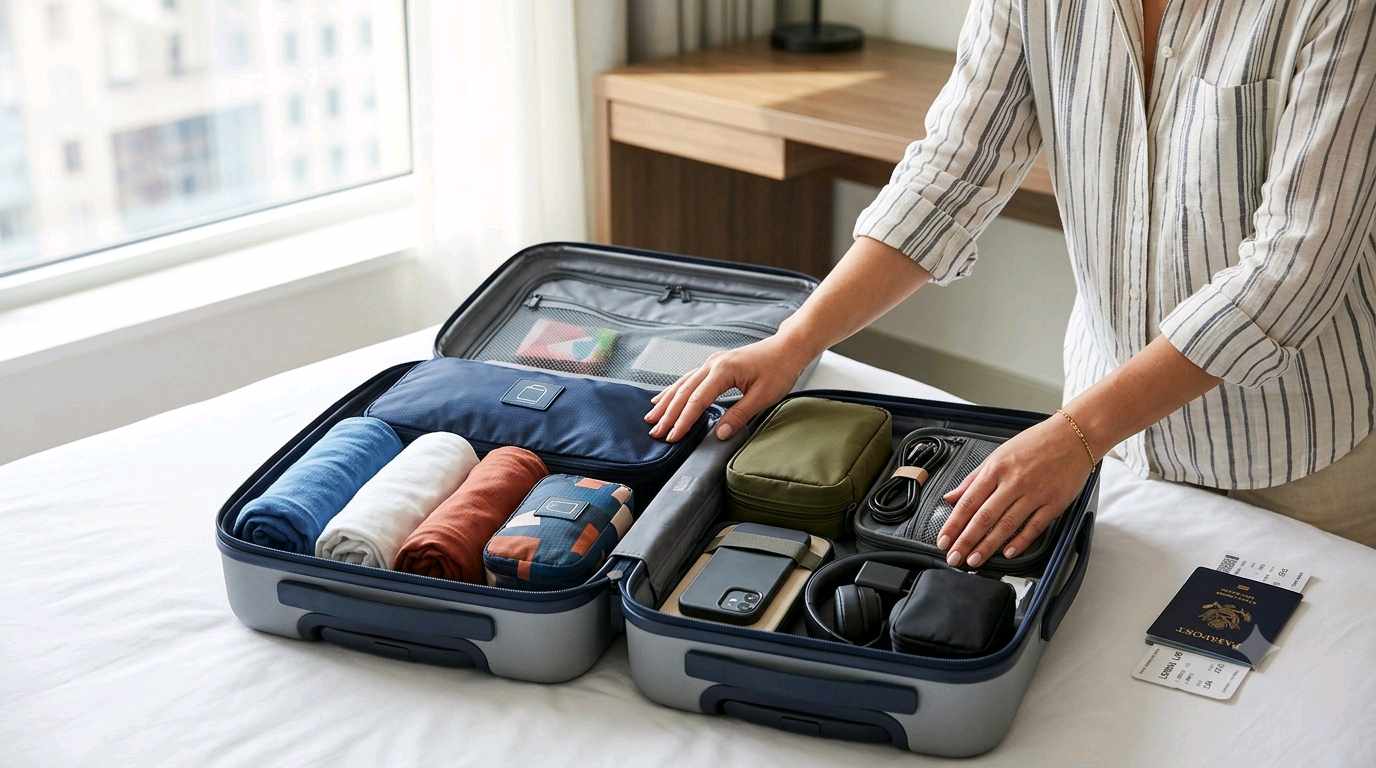
Packing a carry-on efficiently is all about taking fewer, more useful items and organizing them so everything is easy to find. The best approach is to plan your essentials first, choose versatile clothing, use the available space intelligently, and keep important items accessible. Whether you are preparing for a short trip, business journey, weekend getaway, or longer vacation, a well-organized carry-on can save time, reduce stress, and make travel much easier.
How to Pack a Carry-On Efficiently: A Complete Guide
Main Topics
1. Start With a Carry-On Packing Plan
The biggest mistake people make when packing hand luggage is putting things into the bag without a plan. Efficient packing starts before you open your suitcase. Think about where you are going, how long you will stay, what activities you will do, and what items you can realistically use.
Instead of asking, “What should I take?” start by asking, “What will I actually need?” This simple change can prevent overpacking.
- Check the expected weather and activities.
- Make a short packing checklist.
- Choose clothing that can be combined in different ways.
- Separate essential items from optional items.
- Check the airline's current carry-on size and weight rules.
Smart tip: Lay everything you plan to pack on a bed or table before putting it inside the carry-on. This makes unnecessary items much easier to identify.
2. Decide What Belongs in Your Carry-On
Your carry-on should contain the things you genuinely need during the journey and the items you would not want to lose access to. It is especially useful to keep essential travel documents, medications if applicable, electronics, valuables, and basic personal items within easy reach.
A practical carry-on essentials checklist may include:
- Travel documents and identification
- Boarding information or travel confirmations
- Phone and charging cable
- Power bank where permitted
- Wallet and essential payment methods
- Prescription or necessary personal medications
- Basic toiletries
- One change of clothes
- Light jacket or layer
- Headphones or earbuds
- Glasses or other personal necessities
- Small entertainment item for the journey
Do not automatically pack every item from your home. A carry-on works best when every item has a clear purpose.
3. Pack Versatile Clothing
Clothing usually takes up the largest amount of space in a carry-on. The solution is not necessarily to squeeze more clothes into the bag. Instead, choose versatile travel clothing that can be worn in multiple combinations.
For example, a neutral shirt can work with more than one pair of trousers. A lightweight jacket can be used for changing temperatures. Comfortable shoes can often serve several purposes.
Before packing each clothing item, ask:
- Can I wear this more than once?
- Can it be combined with other clothes?
- Is it suitable for the destination?
- Can I wash it easily if necessary?
- Is there a lighter alternative?
This approach creates a small travel capsule wardrobe instead of a bulky collection of individual outfits.
4. Rolling vs. Folding Clothes
There is no single packing method that works perfectly for every item. Rolling can be useful for many casual clothes because rolled garments can fit into gaps around other items. Folding can be better for structured garments that wrinkle easily.
| Item | Useful Method | Reason |
|---|---|---|
| T-shirts | Rolling | Easy to organize and fit into small spaces |
| Casual trousers | Rolling or folding | Depends on fabric and available space |
| Shirts | Folding | Can help reduce wrinkles |
| Underwear | Rolling | Fits well into small spaces |
| Jacket | Fold loosely or wear it | Saves luggage space |
The goal is not simply to roll everything. The goal is to use the shape of the bag efficiently while keeping clothing reasonably wrinkle-free.
5. Use Every Available Space
Efficient carry-on packing means using space that would otherwise remain empty. Small gaps can be surprisingly useful.
- Put small items inside shoes when appropriate.
- Use corners for socks or small accessories.
- Place flat items along the sides of the luggage.
- Use internal pockets for frequently needed items.
- Keep heavier objects closer to the suitcase's lower section when practical.
However, do not fill every empty space just because it exists. Extra space can be useful when repacking, especially after shopping or when your clothes are no longer arranged as neatly as they were at the beginning of the trip.
6. Use Packing Cubes Carefully
Packing cubes can make a carry-on easier to organize. They are particularly useful for separating clothing categories, such as tops, bottoms, underwear, and sleepwear.
However, packing cubes do not magically create additional luggage capacity. They can sometimes encourage people to pack more than they need.
Use them mainly for organization, compression where appropriate, and quick access.
7. Create an Easy-to-Access Layer
One of the best carry-on packing tips is to think about what you may need during the journey. Items you might use at the airport or during transit should not be buried under everything else.
Keep frequently needed items near the top or in an easily accessible compartment.
- Travel documents
- Phone accessories
- Headphones
- Light jacket
- Small personal-care items
- Reading material
Think in layers: emergency and frequently used items should be easiest to reach, while items you probably will not need until arrival can stay deeper inside the bag.
8. Keep Toiletries Small and Organized
Toiletries can quickly consume valuable carry-on space. Choose travel-sized containers where permitted and avoid carrying large bottles when a smaller quantity will be enough.
Place toiletries together in a leak-resistant bag. Follow the liquid and security rules applicable to your departure airport and airline, because requirements can vary by location and may change.
Consider whether you really need every product. Some items may be available at your destination, while others can be replaced with compact alternatives.
9. Wear Bulky Items Instead of Packing Them
If you are traveling with a jacket, heavier shoes, or other bulky clothing, wearing them during transit can free up carry-on space.
This does not mean you should wear uncomfortable layers simply to reduce luggage. Comfort still matters. The idea is to use what you are already wearing strategically.
10. Choose Shoes Carefully
Shoes are among the least space-efficient items in a carry-on. Instead of packing several pairs, select footwear according to your planned activities.
- Choose comfortable shoes for walking.
- Select a versatile pair that works with multiple outfits.
- Pack only specialty footwear when you genuinely need it.
- Place smaller items inside shoes to use otherwise empty space.
For a short trip, one versatile pair plus the shoes you wear during travel may be enough.
11. Protect Electronics and Valuables
Electronics should be packed so they are protected and easy to access when needed. Avoid placing delicate devices underneath heavy objects.
Keep cables organized rather than allowing them to become tangled throughout the bag. A small electronics pouch can keep charging cables, adapters, memory cards, and headphones together.
Valuable items should remain under your control during travel and should not be placed in a way that makes them difficult to monitor.
12. Prepare for Airport Security
A perfectly packed carry-on can become inconvenient if you have to unpack half of it at security. Before leaving, review the current security requirements for your departure airport.
Keep items that may need separate inspection accessible. Follow local requirements for liquids, electronics, batteries, and other restricted items.
Important: Carry-on allowances and security rules are not identical everywhere. Always verify the latest requirements from your airline and relevant airport or aviation authority before traveling.
13. Keep Important Documents Accessible
Do not bury your passport or other essential travel documents at the bottom of your luggage. Use a dedicated, secure location that you can reach without opening the entire bag.
A simple travel document system can include:
- Identification documents
- Boarding information
- Accommodation details
- Transport reservations
- Emergency contact information
Digital copies may also be useful, but they should complement—not necessarily replace—any physical documents required for your journey.
14. Keep One Emergency Outfit
When traveling with only a carry-on, having a spare basic outfit can be extremely useful. Delays, spills, weather changes, or unexpected situations can make a change of clothes valuable.
A simple spare set might include a lightweight top, underwear, and socks. Depending on the trip, you can adjust this list.
15. Do Not Pack “Just in Case” Items Without a Reason
“Just in case” packing is one of the fastest ways to overfill a carry-on. Instead of packing something because you might possibly use it, consider the probability that you will actually need it.
A useful question is:
“If I leave this at home, will it create a real problem?”
If the answer is no, consider leaving it behind.
16. Use a Simple Carry-On Packing Order
A consistent packing order makes your luggage easier to manage. You can use the following sequence:
- Place heavier clothing or larger items at the bottom where appropriate.
- Add organized clothing bundles or packing cubes.
- Fill small gaps with lightweight accessories.
- Keep toiletries in their dedicated bag.
- Protect electronics and fragile items.
- Place frequently needed items near the top.
- Keep documents and essentials in an accessible compartment.
This method creates a predictable layout, so you do not have to search through the entire bag every time you need something.
17. Check the Weight Before Leaving
Size is only one part of carry-on luggage planning. Weight restrictions can also matter. Before leaving for the airport, check the current allowance for your ticket and airline.
If your bag is too heavy, remove items that are unnecessary rather than trying to force everything inside.
18. A Simple Carry-On Packing Checklist
| Category | Examples |
|---|---|
| Documents | Identification, boarding information, reservations |
| Clothing | Versatile outfits, underwear, socks, sleepwear |
| Toiletries | Essential personal-care products |
| Electronics | Phone, charger, headphones, permitted accessories |
| Comfort | Light layer, eye mask, reading material |
| Emergency | Basic spare clothing and necessary personal items |
19. Common Carry-On Packing Mistakes
Even experienced travelers can make packing mistakes. Avoid these common problems:
- Overpacking clothes: Too many outfits create unnecessary bulk.
- Taking too many shoes: Shoes consume valuable space.
- Ignoring weight: A small bag can still become too heavy.
- Hiding essentials: Important items should remain accessible.
- Forgetting security rules: Restricted items can cause delays.
- Using every available gap: Leaving a little room can make repacking easier.
- Packing without a checklist: This increases the chance of forgetting essentials.
20. The Best Minimalist Carry-On Strategy
The most effective approach to minimalist travel packing is to think about function rather than quantity. Every item should serve a purpose, and many items should ideally serve more than one purpose.
Choose clothing that works together, limit duplicate items, organize small accessories, and keep your most important belongings accessible.
Efficient packing is not about fitting your entire life into one suitcase. It is about creating a practical travel system that gives you what you need without unnecessary weight or clutter.
FAQ: Carry-On Packing Questions
How do I pack a carry-on efficiently?
Start with a checklist, remove unnecessary items, choose versatile clothing, organize similar items together, use available spaces carefully, and keep important belongings accessible.
Is rolling clothes better than folding?
Rolling can work well for many casual garments and can make small spaces easier to use. Folding may be preferable for structured or wrinkle-prone clothing. A combination of both methods is often practical.
How many clothes should I pack in a carry-on?
There is no universal number. Pack according to the trip length, weather, activities, laundry availability, and your ability to combine outfits.
Are packing cubes worth using?
Yes, they can be useful for organization and separating clothing categories. They should not be treated as a reason to pack more items than necessary.
What should I keep at the top of my carry-on?
Keep items you may need during the journey or at security near the top, such as travel documents, electronics, a light layer, and permitted personal-care items.
How can I save space in a small carry-on?
Choose versatile clothing, reduce duplicate items, use small gaps intelligently, consider packing cubes, wear bulky clothing when comfortable, and select footwear carefully.
Should I check my airline's carry-on rules?
Yes. Carry-on dimensions, weight allowances, and permitted items can vary between airlines and routes. Always check the latest official rules before your trip.
Conclusion
Learning how to pack a carry-on efficiently can make your entire journey more comfortable. The key is not to squeeze as many things as possible into your luggage. Instead, plan your essentials, choose versatile clothing, organize your belongings, protect valuable items, and keep frequently needed things easy to reach.
A successful carry-on is light, organized, practical, and easy to manage. Once you develop a simple packing system, you can reuse it for weekend trips, business travel, vacations, and many other journeys.
Before leaving home, perform one final check: confirm your documents, essential personal items, electronics, luggage allowance, and current security requirements. A few minutes of preparation can prevent unnecessary problems later.
Disclaimer
This article is provided for general travel-planning and packing information only. Carry-on size limits, weight allowances, security procedures, liquid restrictions, battery rules, and prohibited-item policies can vary by airline, airport, destination, and route and may change over time. Always check the latest official information from your airline, departure airport, and relevant authorities before traveling.