
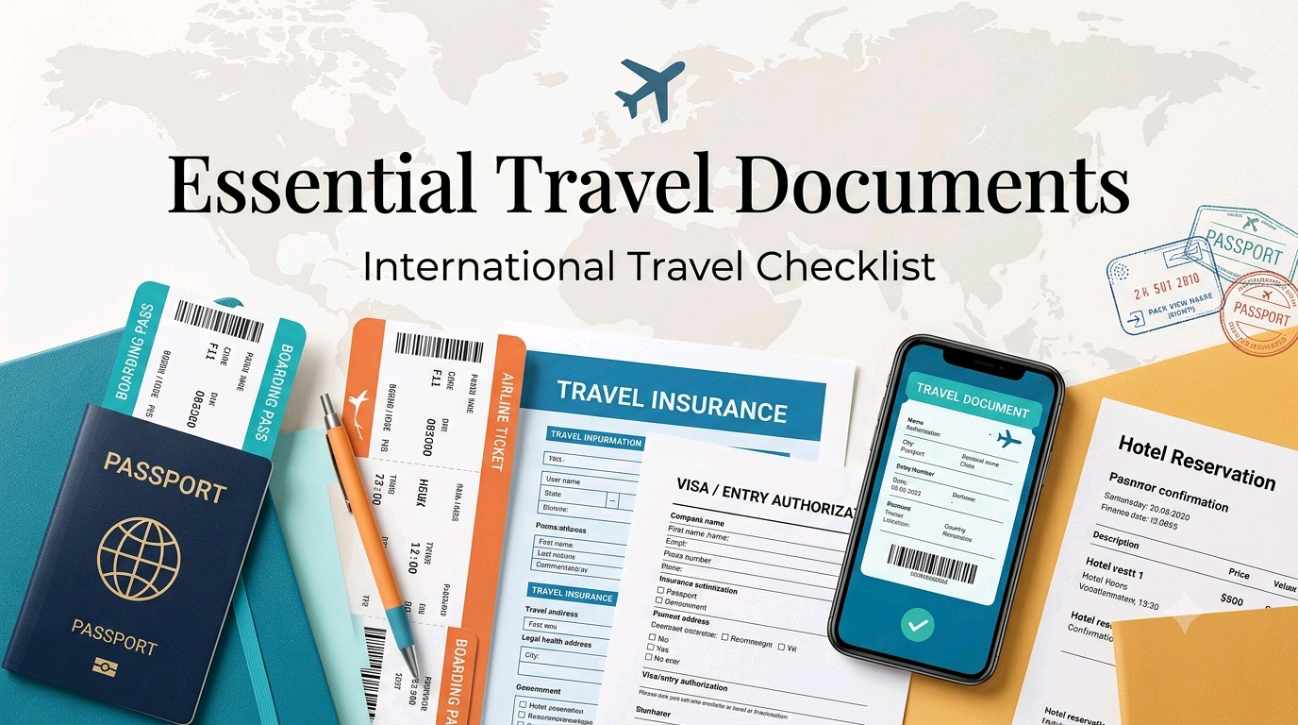
Essential Documents Needed for International Travel: Complete Checklist
What documents do you need for international travel? In most cases, travellers should prepare a valid passport, the required visa or entry authorization, flight information, accommodation details, travel insurance documents and any destination-specific health or financial documents. The exact requirements depend on your nationality, destination, purpose of travel and transit route, so checking the latest official requirements before departure is essential.
International travel can be exciting, but documentation mistakes can turn a smooth journey into a stressful experience. A missing visa, expired passport, incorrect booking detail or unavailable document can create problems at check-in, during transit or at border control.
This international travel documents checklist explains the main documents you should consider preparing and provides practical ways to organize physical and digital copies before leaving home.
Important: Travel and immigration requirements can change. This article is a general planning guide and should not replace information from the relevant government, immigration authority, embassy, consulate or airline.
Main Topics
1. Passport: Your Primary International Travel Document
A passport is normally the most important document for international travel. It proves your identity and nationality and is generally used when crossing international borders.
Do not wait until the day before your trip to check your passport. Review its expiry date and physical condition well in advance.
Passport checklist
- Check the passport expiry date.
- Confirm that your personal information is correct.
- Check whether your destination requires remaining validity beyond your travel dates.
- Check whether blank passport pages are required.
- Make sure the passport is not damaged.
- Keep the original passport secure throughout your trip.
- Keep a separate copy as a backup.
Passport validity rules are not identical everywhere. Some destinations require a particular amount of validity remaining after arrival, while others apply different conditions. Therefore, avoid relying on a universal rule and check the specific destination requirements.
2. Visa or Electronic Travel Authorization
Depending on your nationality and destination, you may need a visa, e-visa, electronic travel authorization or another form of entry permission.
Visa requirements can also depend on why you are travelling. A tourist, business traveller, student and temporary worker may have different documentation requirements even when travelling to the same country.
Check these visa details:
- Whether a visa is required.
- The correct visa category.
- Whether an electronic authorization is required.
- Allowed length of stay.
- Number of permitted entries.
- Visa validity dates.
- Whether your transit country has additional requirements.
Best practice: Check visa information through the official government or immigration website of your destination whenever possible. If an embassy or consulate provides specific instructions for your nationality, follow those instructions.
3. Flight Tickets and Travel Itinerary
Your flight booking confirmation is another useful document to keep accessible. It normally contains your flight number, travel date, departure and arrival information and booking reference.
Depending on the destination and your circumstances, you may also need to demonstrate onward or return travel.
Keep your flight information accessible:
- Booking confirmation
- Flight number
- Departure and arrival times
- Airport information
- Connecting flight details
- Return or onward booking where applicable
- Airline contact information
Save the confirmation on your phone before reaching the airport. A screenshot or offline copy can be useful if internet access is unavailable.
4. Proof of Accommodation
Some travellers may be asked to show where they intend to stay. A hotel reservation, rental confirmation, invitation letter or other accommodation evidence can therefore be useful.
Accommodation details to keep
- Property or hotel name
- Complete address
- Reservation number
- Check-in date
- Check-out date
- Telephone number
- Host or invitation information when applicable
Try to keep your accommodation information consistent with your itinerary. If you change hotels during the journey, save the updated confirmations.
5. Travel Insurance Documents
Travel insurance can provide financial protection for certain unexpected situations covered by your policy. Depending on the plan, coverage may include eligible medical expenses, emergency assistance, trip cancellation, interruption, baggage problems and other travel-related risks.
Some destinations or visa categories may require specific insurance coverage. Even when insurance is optional, having your policy details readily available can make it easier to seek assistance if something goes wrong.
Keep these insurance details with you:
- Policy number
- Policy dates
- Emergency assistance number
- Coverage summary
- Claim instructions
- Important exclusions
Do not select travel insurance based only on the cheapest premium. Read the coverage limits, exclusions, emergency procedures and conditions before purchasing a policy.
6. Health and Vaccination Documents
Health documentation requirements vary between destinations. Depending on your route and the applicable rules, you may need certain vaccination certificates, health certificates or other medical documentation.
Travellers who carry prescription medicines should also check whether their medicines are permitted in the destination country. A prescription, doctor's letter or medication information may be useful when appropriate.
Possible health-related documents
- Required vaccination certificate
- Health certificate where applicable
- Prescription
- Doctor's letter where appropriate
- Medication list
- Travel insurance medical assistance details
Health rules can change, so check current destination-specific guidance before travelling.
7. Proof of Financial Means
Some countries may require visitors to demonstrate that they have enough funds to support themselves during their stay. Requirements can vary according to nationality, visa type, destination and individual circumstances.
Where financial evidence is required, acceptable documents can vary. Examples may include bank statements, proof of income, sponsorship documents or other accepted evidence.
8. Emergency Contact Information
Emergency contact information is easy to overlook, but it can be extremely useful during an unexpected situation.
Do not depend entirely on your phone's contact list. Your phone may run out of battery, become damaged or be unavailable.
- Family or trusted contact
- Travel insurance emergency number
- Accommodation contact
- Airline contact
- Local emergency services
- Embassy or consulate contact when relevant
Keep important emergency numbers somewhere that you can access even when your phone is offline.
9. Identification and Supporting Documents
Your passport may be the main identification document for international travel, but additional identification and supporting paperwork can sometimes be useful.
The documents you need can depend on the purpose of your journey.
Examples include:
- National identity document where applicable
- Driving licence
- International Driving Permit where required
- Business invitation
- Employment-related documentation
- Student documents
- Event or conference registration
- Medical referral documents
- Documents relating to children or guardianship where required
10. Documents for Travelling With Children
Families travelling internationally should pay particular attention to documentation requirements for minors. A child may need their own passport and visa or entry authorization, depending on the destination.
In some situations, authorities can also request evidence of parental relationship, consent from a parent or guardian, custody documentation or other supporting paperwork.
Because requirements differ considerably, parents and guardians should check the rules for the specific country and travel circumstances before departure.
11. Digital Copies of Important Documents
One of the smartest steps in preparing documents needed for international travel is creating secure digital backups.
A digital copy cannot replace an original passport or required physical document, but it can be extremely helpful if an original is lost or damaged.
Recommended backup system
- Keep all original documents secure.
- Make clear copies of important documents.
- Store digital copies securely.
- Download important files for offline access.
- Keep physical copies separately from originals.
- Consider keeping an emergency copy with a trusted person when appropriate.
Protect sensitive digital documents carefully. Avoid storing passport or financial information in insecure public locations or sharing copies unnecessarily.
12. Travel Document Checklist Before Departure
| Document | Purpose | Backup |
|---|---|---|
| Passport | Identity and international border crossing | Yes |
| Visa / Entry Authorization | Entry permission when required | Yes |
| Flight Confirmation | Travel booking information | Yes |
| Accommodation Proof | Evidence of intended accommodation | Yes |
| Travel Insurance | Policy and emergency assistance information | Yes |
| Health Documents | Destination-specific health requirements | Yes |
| Financial Evidence | May demonstrate available funds | Secure copy |
| Emergency Contacts | Useful during emergencies | Yes |
13. Organize Your Documents by Priority
Not every document needs to be accessed equally often. Organizing documents by priority makes travel easier.
Keep immediately accessible:
- Passport
- Visa or entry authorization
- Boarding pass
- Important transit documents
- Emergency information
Keep securely stored:
- Insurance policy
- Accommodation confirmations
- Financial documents
- Medical documents
- Copies of identity documents
This simple organization system can help you avoid searching through your luggage whenever you need a document.
14. Common International Travel Document Mistakes
- Checking passport validity too late.
- Assuming a visa is not required without checking.
- Forgetting transit-country requirements.
- Keeping documents only on a smartphone.
- Using outdated travel information.
- Ignoring insurance exclusions.
- Keeping all original documents together.
- Forgetting documentation requirements for children.
- Not saving important information offline.
15. Verify Requirements Before You Leave
The most important rule for international travel documentation is simple: do not rely on a generic checklist alone.
Requirements can depend on your passport, destination, length of stay, purpose of travel and transit route. Rules may also change after you have booked your trip.
Before departure, check the latest information from the destination's official immigration or government authority. You can also check relevant embassy or consular guidance and airline requirements.
For additional travel-document information, the International Air Transport Association provides a Travel Centre with passport, visa and health requirement information for travellers.
✈️ More Traveling Tips
Loading travel tips...
Frequently Asked Questions
What documents are needed for international travel?
The common documents include a valid passport, required visa or entry authorization, flight booking, accommodation information and travel insurance details. Depending on the destination and traveller, health, financial and other supporting documents may also be necessary.
How long should my passport be valid for international travel?
There is no single worldwide rule. Different destinations can have different passport-validity requirements. Check the specific rules applicable to your nationality and destination before travelling.
Do I need a visa for international travel?
Not necessarily. Visa requirements depend on your nationality, destination, purpose of travel and length of stay. Some travellers may qualify for visa-free entry, visa on arrival or electronic authorization.
Should I carry printed copies of travel documents?
Yes. Digital copies are convenient, but printed backups can be useful if your phone is lost, damaged or unable to access the internet.
Is travel insurance necessary?
Travel insurance is not universally mandatory, although certain destinations or visa categories may require specific coverage. Even when optional, appropriate insurance can provide useful protection for covered travel and medical risks.
What documents should families carry when travelling with children?
Children may need their own passport and visa or entry authorization. Depending on the circumstances, parental consent, birth or relationship documents, custody paperwork or other supporting documents may also be required.
Can I use a digital copy instead of my passport?
A digital copy is useful as a backup but generally does not replace the original passport when the original is required for international travel or border control.
Why should I check transit-country requirements?
Transit rules can differ from the requirements of your final destination. Depending on your route and whether you leave the airport transit area, additional visa or documentation requirements may apply.
Where should I check the latest travel requirements?
Check official government, immigration, embassy or consular sources for the destination. Airline guidance and reputable travel-information services can provide additional help, but official authorities should be your primary reference.
Final Pre-Departure Checklist
- Passport validity checked
- Visa or entry authorization checked
- Transit requirements checked
- Flight booking saved
- Accommodation confirmation saved
- Travel insurance details accessible
- Health requirements checked
- Financial documents prepared if required
- Emergency contacts available
- Digital copies prepared
- Printed backups prepared
- Official requirements rechecked before departure
Conclusion
Preparing the essential documents needed for international travel should be one of the first steps in your trip planning process. A valid passport and required entry authorization are usually the most important documents, but flight information, accommodation proof, travel insurance, health documents, financial evidence and emergency contacts may also be relevant depending on your journey.
The safest approach is to prepare early, organize documents carefully, create secure backups and verify the latest destination-specific requirements through official sources. Do not assume that requirements are the same for every country or every traveller.
A well-organized travel document checklist can save time, reduce stress and help you deal with unexpected situations more confidently. Once your paperwork is ready, you can focus on the more enjoyable part of international travel—experiencing your destination.
Prepare your documents today and travel with greater confidence tomorrow.